AI Decoded #8 of 8
Youre Not in That Meeting Anymore — Heres Your Next Move
Six layers, one connected system. Heres how the foundation becomes the model becomes the technique becomes the product — and where your real AI strategy begins.
Sundar Rajan
Feb 18, 2026
4 min read
Part 8 of 8 — AI Decoded for Founders | The Mental Map
You started this series in a meeting, nodding along.
You're not in that meeting anymore.
You've done something most founders never do — you sat with the full picture, layer by layer, until every term had a place and every conversation had a structure. That's not a small thing. Most people who claim to understand AI have a handful of terms and a lot of confidence. You now have a framework.
This final part does three things. It shows you how the six layers connect as one system. It shows you how a real decision moves through all six layers at once. And it points to where the next conversation — your actual AI strategy — begins.
The Six Layers as One System
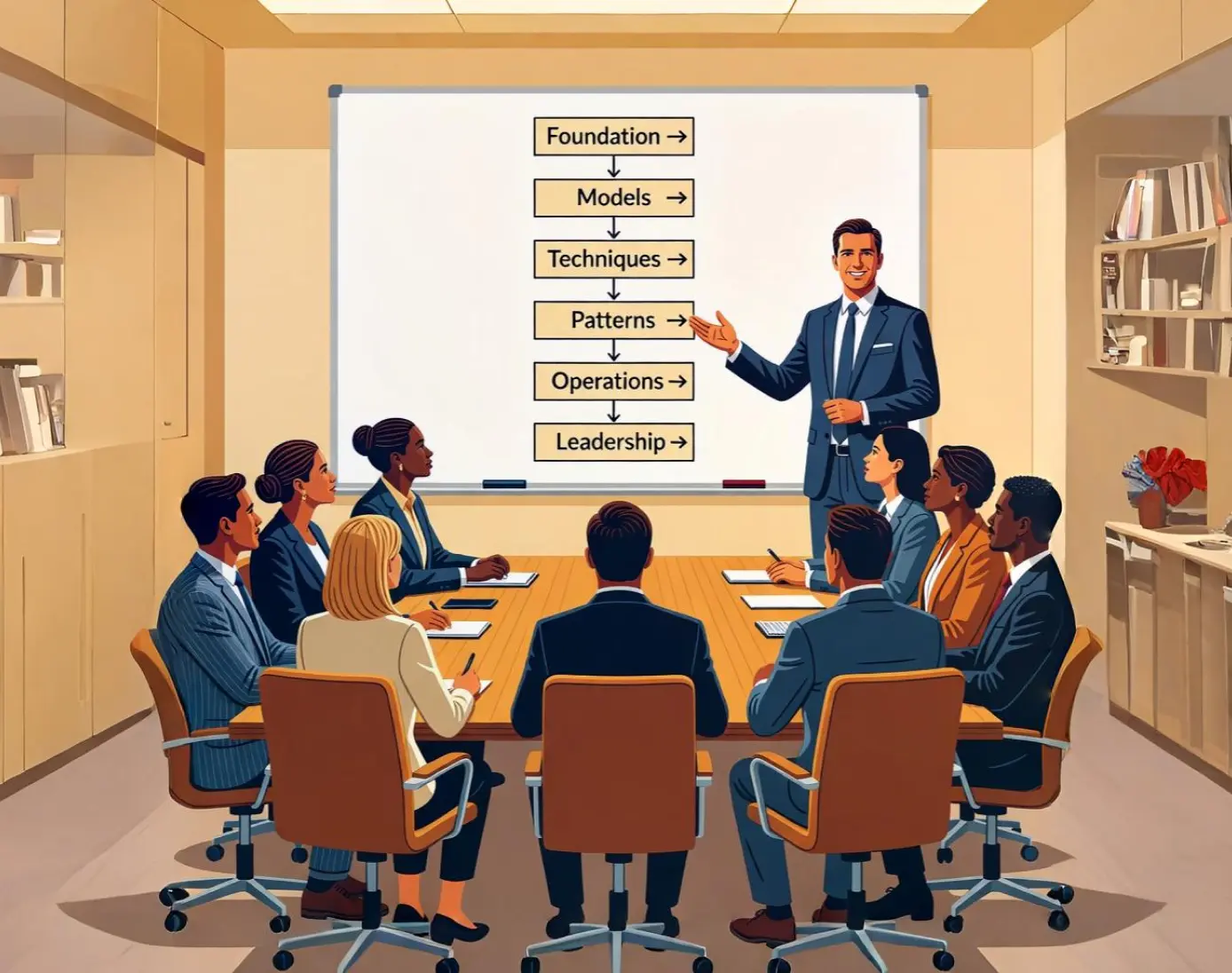
Each layer in this series was presented on its own. But they don't operate on their own. Each one enables the next. Here's how they connect:
| Layer | What it is | What it does for your firm |
|---|---|---|
| Layer 1: Foundation | The science that made modern AI possible | Explains why the capability exists at all |
| Layer 2: Models | The specific AI systems your firm can access | Defines what you're working with |
| Layer 3: Techniques | RAG, fine-tuning, guardrails, grounding | Makes a general AI specific to your firm |
| Layer 4: Application Patterns | Agents, copilots, orchestration, pipelines | Places AI inside your actual workflows |
| Layer 5: Operations | Inference, evals, observability, data drift | Keeps what you've built performing reliably |
| Layer 6: Leadership | Moat, governance, reservation, frontier firm | Determines what it all builds toward |
Strip any layer out and the system breaks. A firm with great models and no techniques has a general AI that doesn't know its own business. A firm with great techniques and no operating design has AI that doesn't fit into its workflows. A firm with everything technically sound and no leadership layer has capability without direction — and no answer when an investor, a client, or a regulator asks the hard questions.
All six layers. All the time.
The Mental Map in Action
This is where the framework earns its keep.
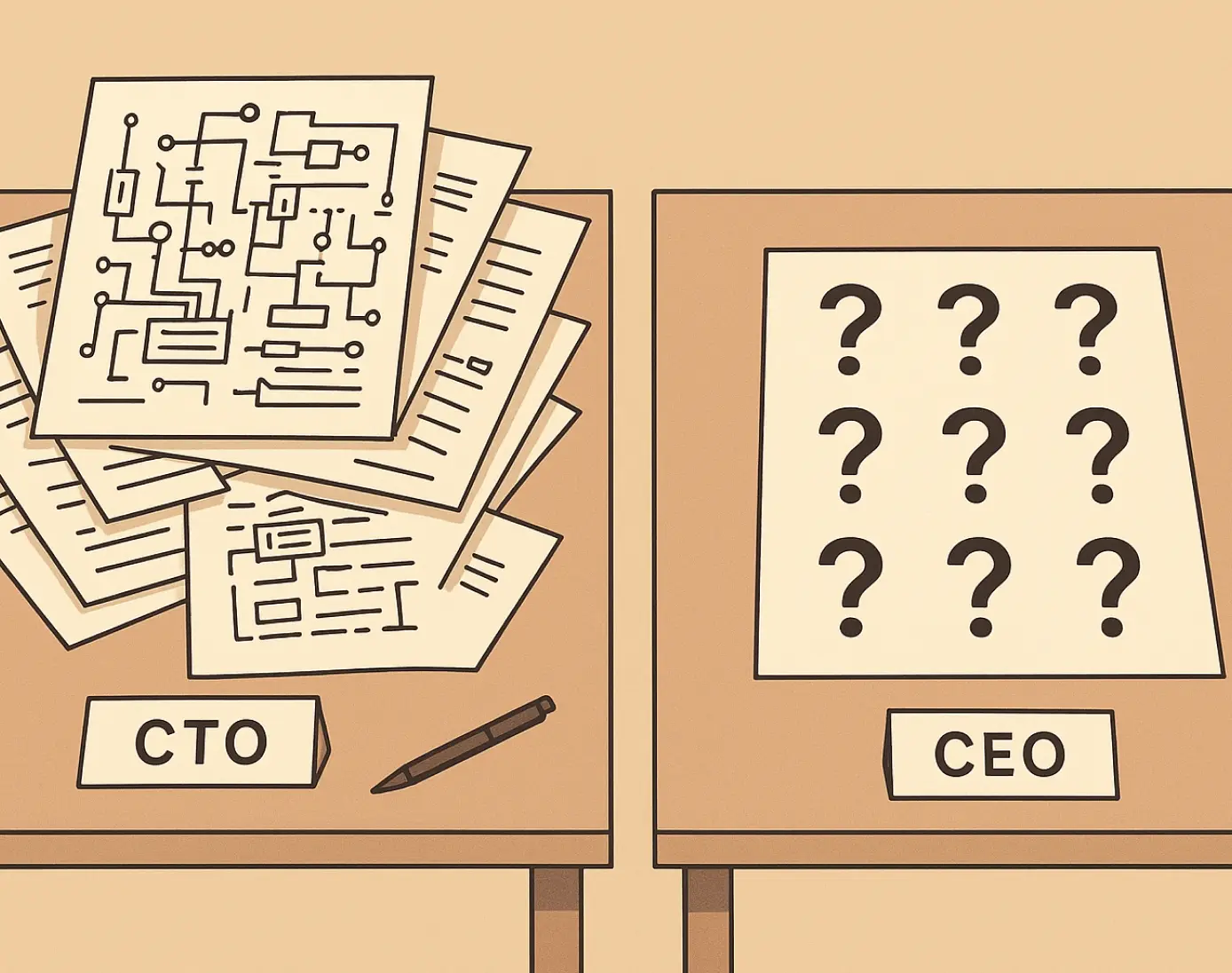
Your CTO comes to you with a proposal: "We should build an AI research agent for the firm." Here is how that single decision moves through all six layers — and what you can now say at each one.
Layer 1 — Foundation. You understand why this proposal is even possible now. The transformer architecture means AI can hold and reason across the long, complex documents your research requires. This wasn't genuinely viable five years ago. You're not being sold something premature. You ask: "What's changed in the past two years that makes this the right moment?" You know the answer before they give it.
Layer 2 — Models. Which model? Proprietary or open source? You know this is a strategic question, not a technical one. Your research work touches confidential client data. Data residency matters. You ask: "Does client data stay on our infrastructure, or does it pass through a third-party API?" That question separates vendors in thirty seconds.
Layer 3 — Techniques. You know the sequencing. RAG first — your firm's knowledge base is the asset that makes this agent valuable. Fine-tuning is a later decision, once the use case is proven. Grounding is non-negotiable. Every output your agent produces in client-facing work cites its source. Guardrails prevent it from presenting uncertain information as fact. You ask: "What's the plan for connecting our knowledge base — and what are the guardrails before this touches a client deliverable?"
Layer 4 — Application Patterns. This is an agent, not a copilot. It runs a defined research workflow autonomously — brief in, structured draft out. But human review sits before anything reaches a client. You ask: "Where exactly does the human checkpoint sit in this pipeline, and who owns that step?" You can now draw the operating model before the build starts.
Layer 5 — Operations. Before launch, not after. You ask: "What does it cost per research brief at 3x current volume? What are the evals — actual numbers, not impressions? How do we know when quality starts slipping without someone noticing it by accident?" You have the eight questions from Part 6. You ask them now.
Layer 6 — Leadership. The questions only you can answer. What moat does this build — not just what it does, but what it makes harder for competitors to match over time? Who is accountable if a client deliverable contains a hallucinated statistic? What is your firm's strategic reservation — specifically, that a named partner always owns the final recommendation, always? You answer these before the CTO goes to build. Not after.
That's the mental map in action. One decision, six lenses, complete clarity.
What the Vocabulary Unlocked
The terms were never the point.
Knowing what RAG stands for does not make your firm better at AI. Knowing what an agent is does not make your operating model clearer. The vocabulary was the door — the thing that gets you into the conversation, rather than surviving at the edges of it.
What's on the other side of the door is what matters: the ability to ask the right questions, evaluate the right decisions, and lead the conversations that used to happen without you. The ability to sit across from a vendor and know which layer they're actually talking about. The ability to tell your technical team what matters — not because you can do their job, but because you understand yours.
That is what this series built.
What Comes Next
The map is complete. The vocabulary is in place.
The next conversation is strategy.
Not "should we use AI?" — that question is already answered. Every serious firm is. The question is: what are we specifically building, for which workflows, at what pace, with what moat, and with what explicit decisions about what stays human?
That is a different conversation. And it requires everything you now have — the vocabulary, the framework, the leadership questions — plus one more thing: a clear-eyed look at your firm's specific situation, capabilities, and competitive context.
That's the conversation this series was preparing you for.
You're ready to have it.
We Build AI Employees to Work Alongside Your Team
Want to Have a Strategic Discussion?
Book A Discovery CallDon't miss out on an additional 5x to 10x revenue growth and stay ahead of competitors